Choosing the right farm baler is a crucial decision for any agricultural operation. A baler is an investment that can significantly impact your farming efficiency, productivity, and overall profitability. Whether you’re running a small family farm or a large commercial operation, selecting the right baler will ensure that you maximize the return on your investment while minimizing unnecessary expenses. In this guide, we’ll explore the key factors to consider when purchasing a farm baler, including crop type, farm size, budget, and maintenance needs, to help you make an informed decision.
Understand the Different Types of Farm Balers
The first step in choosing the right farm baler is understanding the different types available on the market. The two most common types of balers used in farming are round balers and square balers.
Round Balers: These balers are ideal for making cylindrical bales and are typically more suitable for larger farming operations. They are designed to handle more substantial volumes of hay, straw, or silage, making them more efficient for large-scale farming.
Square Balers: Square balers create rectangular bales, which are easier to handle, stack, and transport. These balers are commonly used for small- to medium-sized farms or for operations that require more precise bale sizes. They are often preferred by farmers who need to transport bales long distances or use them for storage purposes.
When deciding between round and square balers, consider the size of your operation, storage capabilities, and transportation needs.
Assess Your Crop Type
Different balers are better suited for specific types of crops. Depending on what you are baling—whether it’s hay, straw, silage, or other crops—you’ll need to select a baler that can handle those materials efficiently.
Hay Baling: If you are baling hay, both round and square balers can be effective, depending on your farm’s scale. Round balers are ideal for larger volumes of hay, as they can quickly create large bales, while square balers may be more appropriate for smaller-scale operations that require more compact and neatly stacked bales.
Silage Baling: For silage, which requires more compression to preserve its moisture content, you may want a baler designed specifically for this purpose. Some round balers are designed with special features to handle the moisture content of silage and prevent spoilage during the baling process.
Straw Baling: Straw is often baled after a harvest, and it can be more challenging to bale due to its brittle nature. Look for a baler with robust compression and pickup systems designed to handle dry, brittle straw without losing material during the process.
Ensure that the baler you choose is compatible with the crops you plan to harvest, as using the wrong type of baler can lead to inefficiencies and material loss.
Consider the Size and Scale of Your Operation
The size of your farm plays a critical role in determining which baler is right for your operation. Larger farms with high-volume production will require a more robust and efficient baling solution, while smaller farms may benefit from more compact, less expensive models.
Large-Scale Farms: For large-scale operations, consider purchasing a high-capacity round baler. These machines are designed to handle large quantities of material at once and work more efficiently in larger fields. High-capacity balers often come with automated features such as auto-tie systems and bale wrapping capabilities, which can speed up the process and reduce the need for manual labor.
Small to Medium Farms: If you operate a smaller farm or have a more niche production, you may be better off with a smaller square baler or a compact round baler. These models are easier to maneuver, require less horsepower, and are often more cost-effective for smaller operations. They also tend to have simpler mechanisms, making them easier to maintain.
Ensure that your baler is well-suited to your farm’s scale. Over-sized equipment on a small farm can result in unnecessary fuel costs and maintenance, while under-sized equipment on a large farm will lead to inefficiencies.
Evaluate Your Budget
When purchasing a farm baler, budget is one of the most important factors to consider. Balers come in a wide range of prices, with high-end models offering more features but also higher costs. It’s essential to assess your budget and determine how much you’re willing to spend on your baling equipment.
New vs. Used: If you’re on a tight budget, buying a used baler could be a viable option. Many used balers are in good condition and come at a fraction of the cost of a new one. However, be sure to inspect used equipment carefully to ensure it has been well-maintained and doesn’t have hidden defects that could lead to costly repairs.
Financing Options: If purchasing a new baler is essential to your operations but you’re concerned about upfront costs, consider financing options. Many dealerships offer financing plans that can help ease the burden of purchasing a new machine. Just make sure the monthly payments fit within your budget.
Long-Term Investment: While it might be tempting to opt for a less expensive model, investing in a high-quality baler can lead to long-term savings. High-end balers are typically more durable and require less maintenance, saving you money in the long run.
Remember that while a new or more expensive baler may seem costly initially, it can ultimately improve efficiency and profitability on your farm.
Maintenance and Reliability
Another critical factor to consider when choosing a farm baler is maintenance requirements. Regular maintenance is essential to ensure your baler operates efficiently over time. Before purchasing, inquire about the expected maintenance schedule and parts availability for the baler model you’re interested in.
Maintenance Costs: Understand the maintenance costs associated with different models. Some balers require more frequent servicing and replacement of parts, while others are designed to be more durable with fewer maintenance needs. Choosing a model with low maintenance costs can save you money in the long run.
Parts and Service Support: Look into the availability of parts and service support for the baler. Having quick access to replacement parts and reliable technicians can prevent downtime during peak harvesting seasons.
Vanliga frågor
How do I know if I need a round or square baler?
Choose a round baler if you need high-volume, large bales and have enough space for storage. Opt for a square baler if you need compact, easy-to-stack bales, especially for small to medium-sized farms or for transportation and storage.What factors should I consider when buying a used baler?
When buying a used baler, inspect the machine’s condition, age, hours of use, and maintenance history. Check for signs of wear on key components like belts, chains, and hydraulic systems.How do I choose the right size of baler for my farm?
Consider your crop production volume, field size, and tractor power when choosing a baler. Larger operations with significant acreage require high-capacity balers, while smaller operations can often use more compact models.What maintenance is required for a farm baler?
Regular maintenance includes cleaning, lubricating moving parts, checking for wear on the pickup mechanism, and replacing damaged or worn parts like belts, bearings, and hydraulic components.
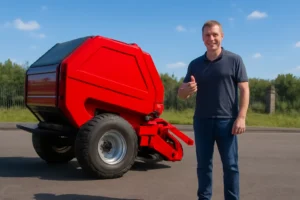
Choosing the right farm baler for your operation requires careful consideration of factors such as crop type, farm size, budget, and maintenance needs. By understanding these key aspects, you can make a more informed decision and select a baler that enhances your farm’s productivity while minimizing operational costs. Whether you’re looking for high-capacity balers for large fields or more compact models for smaller farms, the right baler can significantly improve your baling efficiency, ultimately benefiting your bottom line.